Learn › Equipment
Choosing CETMA Composites Fins: PRANA, EDGE, MANTRA and DYNAMI-TECH Compared
Sort by use case first, stiffness second — not the other way round. Where each of the six models sits, the official weight ranges, and the overall comparison chart. Plus why I will not endorse the DRS system on the MANTRA.
Source statement
>
All the specifications below come from CETMA Composites official releases. I am merely
a translator, hoping Asian customers can get a better idea of which fins to choose.
I do not hold possession of any of the info.
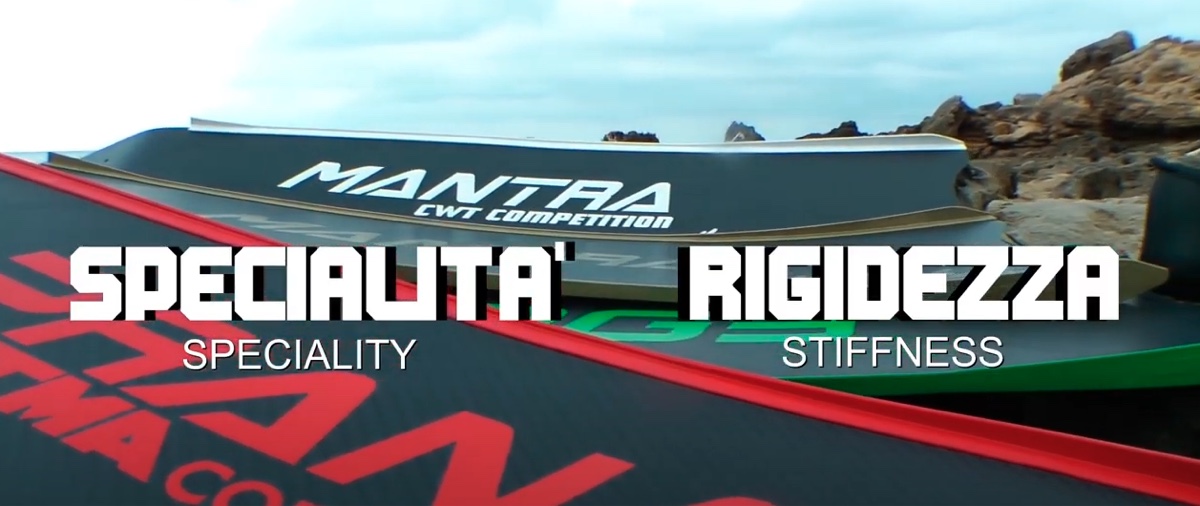
The most common mistake when buying fins is opening with "which pair is better". There is no such thing.
Sort by use case first, then by stiffness. Do it the other way round and you will end up with fins that look great and destroy your legs thirty minutes in.
Step one: the use case
The use cases break down into two groups and four situations:
- Freediving — outdoor (open water) and indoor (confined water)
- Spearfishing — medium-to-shallow depth, and deep
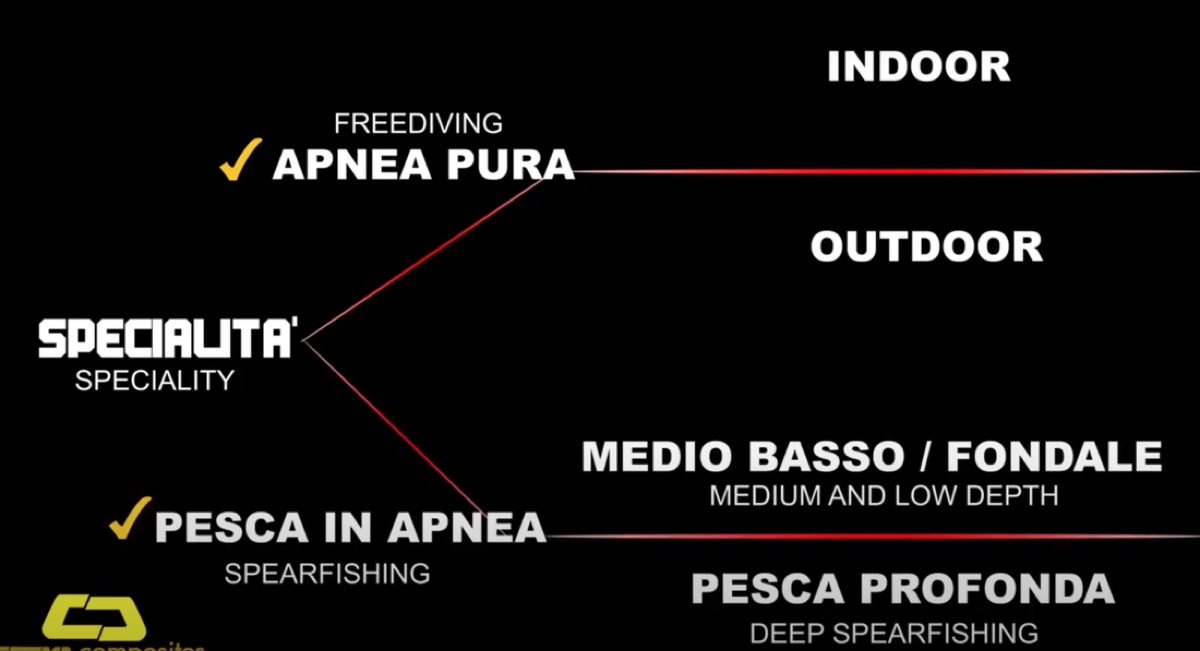
Some models cross more than one situation, so treat this as a positioning map rather than a set of exclusive categories.
Step two: stiffness, matched to your body
What matters most is choosing by your use case and your body mass. Your fins should not leave your legs overworked.
Body mass here is not only your weight — it includes your height, the length of your lower legs, and how much muscle you carry. Every official weight range is a starting point:
All the weight figures below are official suggestions only. What settles it is how the fins feel when you try them. This applies to every model below and will not be repeated.
The six models
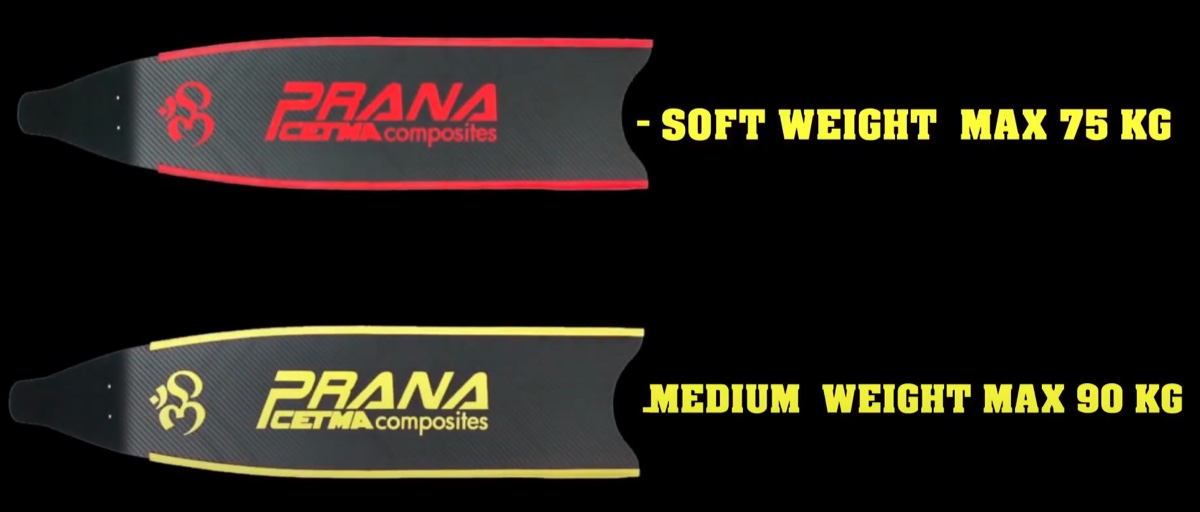
PRANA — built for spearfishing at medium-to-shallow depth
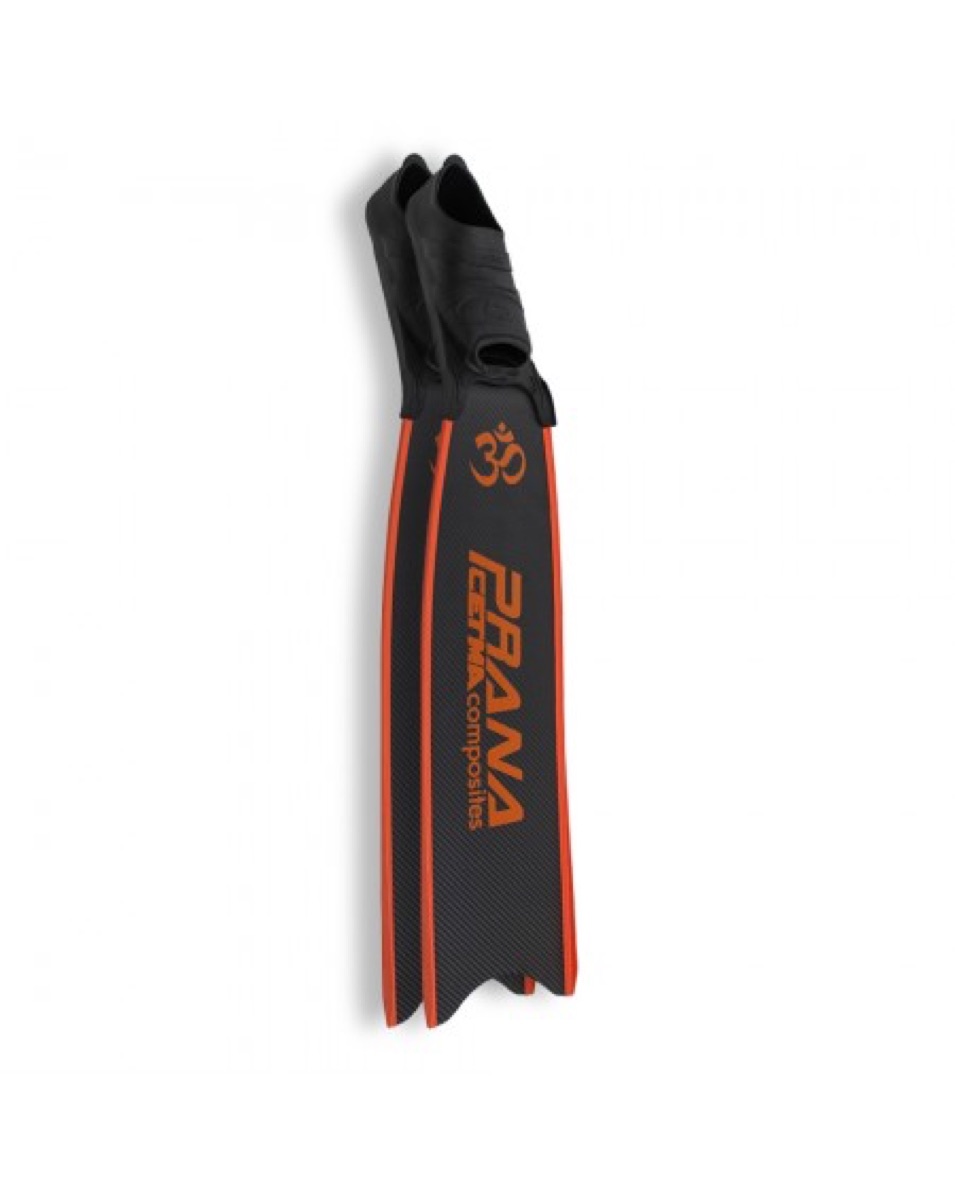
The blade length suits moving through reef and near-shore swell, and the angle makes surface swimming easier.
- SOFT: for users up to 75kg
- MEDIUM: for users up to 90kg
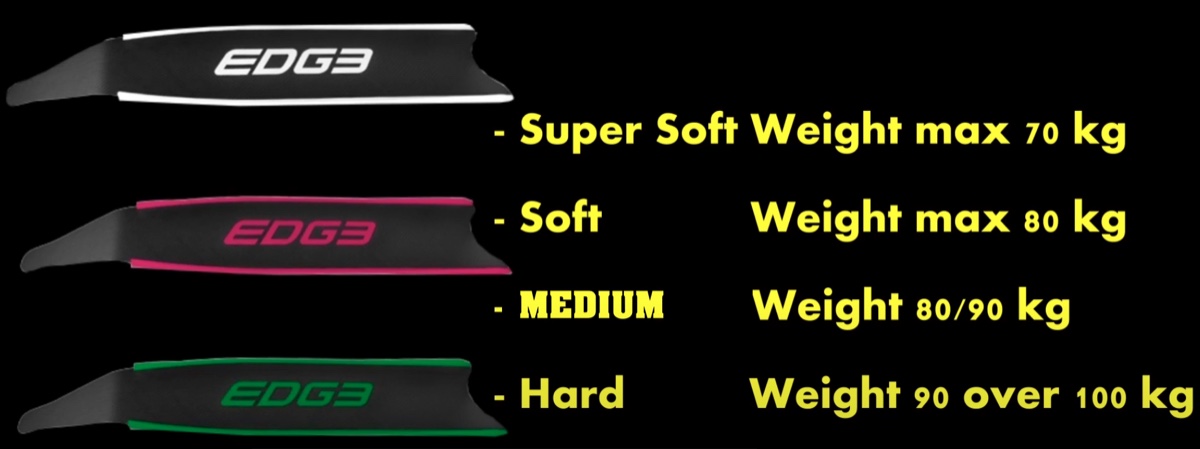
EDGE — strong feedback and drive, for deep spearfishing
Suits divers with strong legs who load the blade hard.
Extra-soft and soft can also be used for freediving, for users in the 75–90kg range. (The spoken official description and the chart differ slightly; go by the chart.)
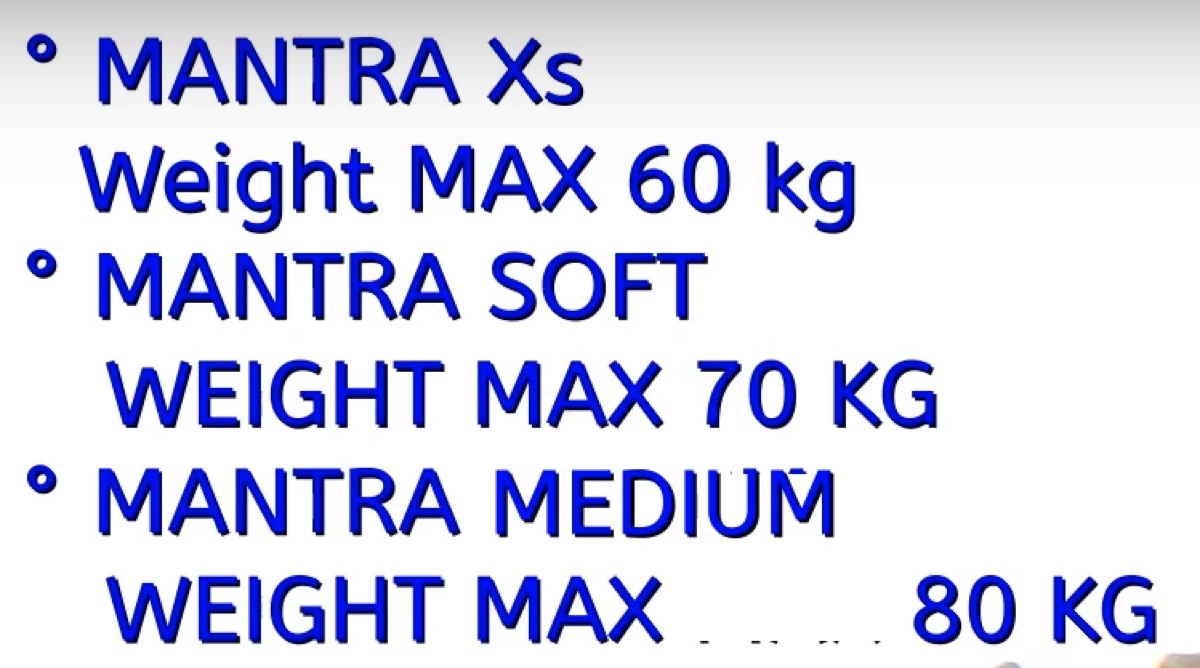
MANTRA — the freediving model, with DRS
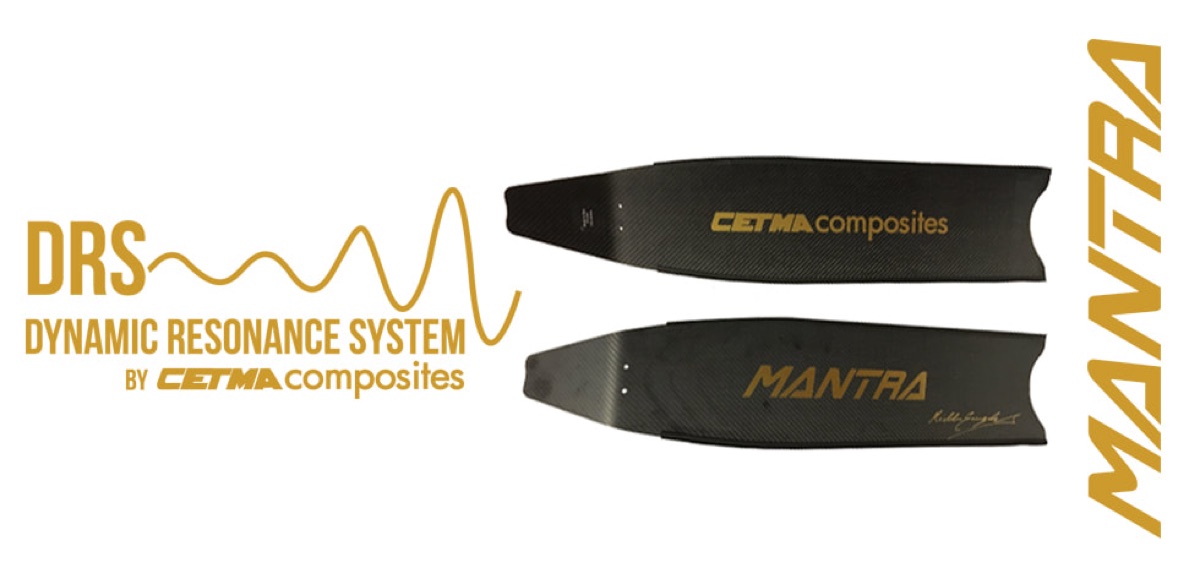
CETMA's DRS (dynamic resonance system) is the selling point of this pair.
The official claim rests on resonance, which is a real phenomenon: when an external driving frequency approaches an object's natural frequency, the object's own oscillation reinforces itself, and the resulting amplitude exceeds the input. At the resonant frequency a very small periodic force can produce a large oscillation, because the system stores the oscillation's energy.
The MANTRA can also be used for spearfishing.
I will not endorse DRS.
>
As someone with a science background, I am not currently prepared to endorse the DRS system
or the way it is said to work on the MANTRA, **because I have not yet seen any literature or
research on it.** If you have some, please show me.
>
The resonance physics above is sound. But "resonance exists" and "these fins genuinely
exploit resonance and are therefore less tiring" are two different claims. The second one
needs evidence.
MANTRA CWT Competition — built for constant weight
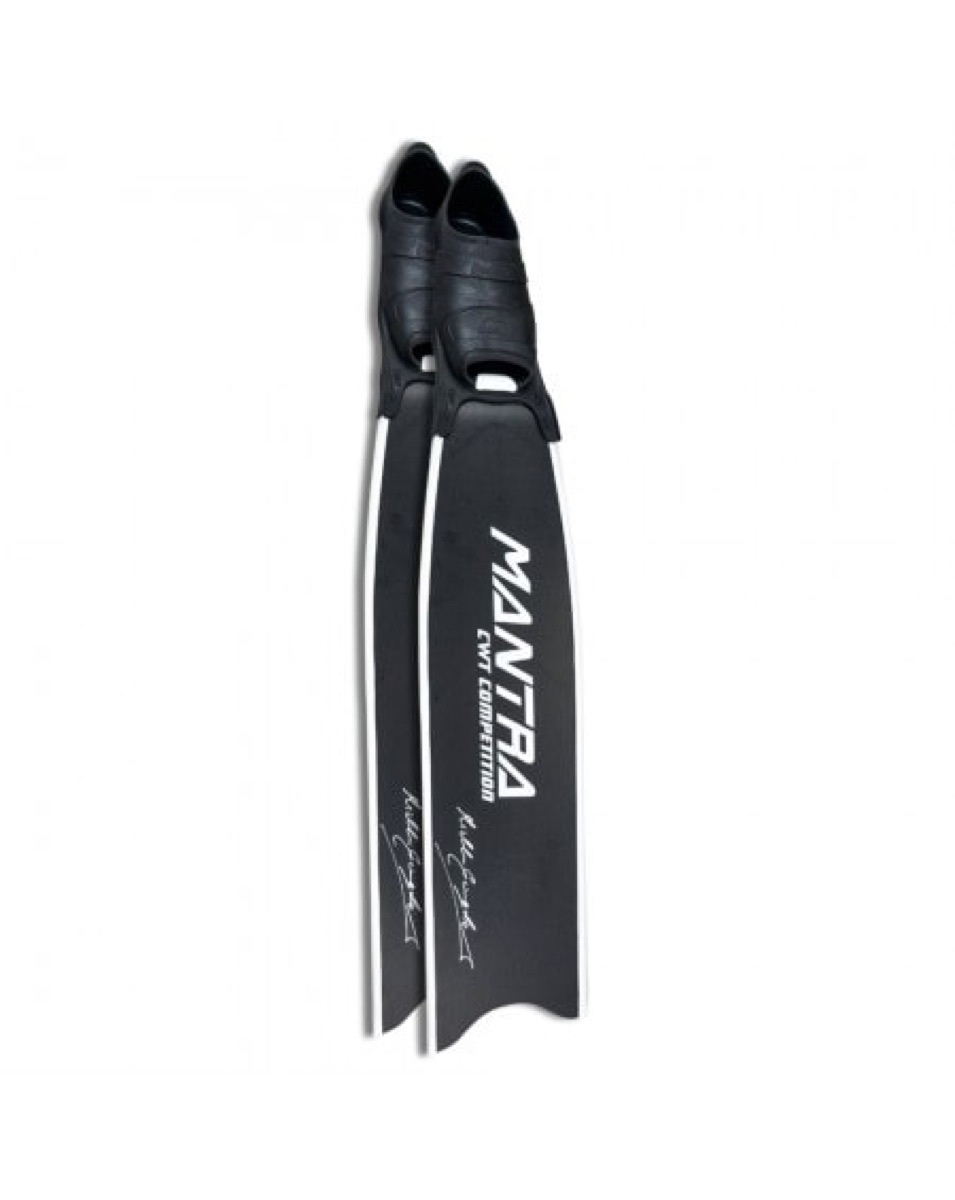
Carries the strengths of the MANTRA range, with a layered carbon lay-up intended to reduce leg fatigue.
- SOFT: for users up to 55kg
- MEDIUM: for users up to 75kg
DYNAMI-TECH — long and short
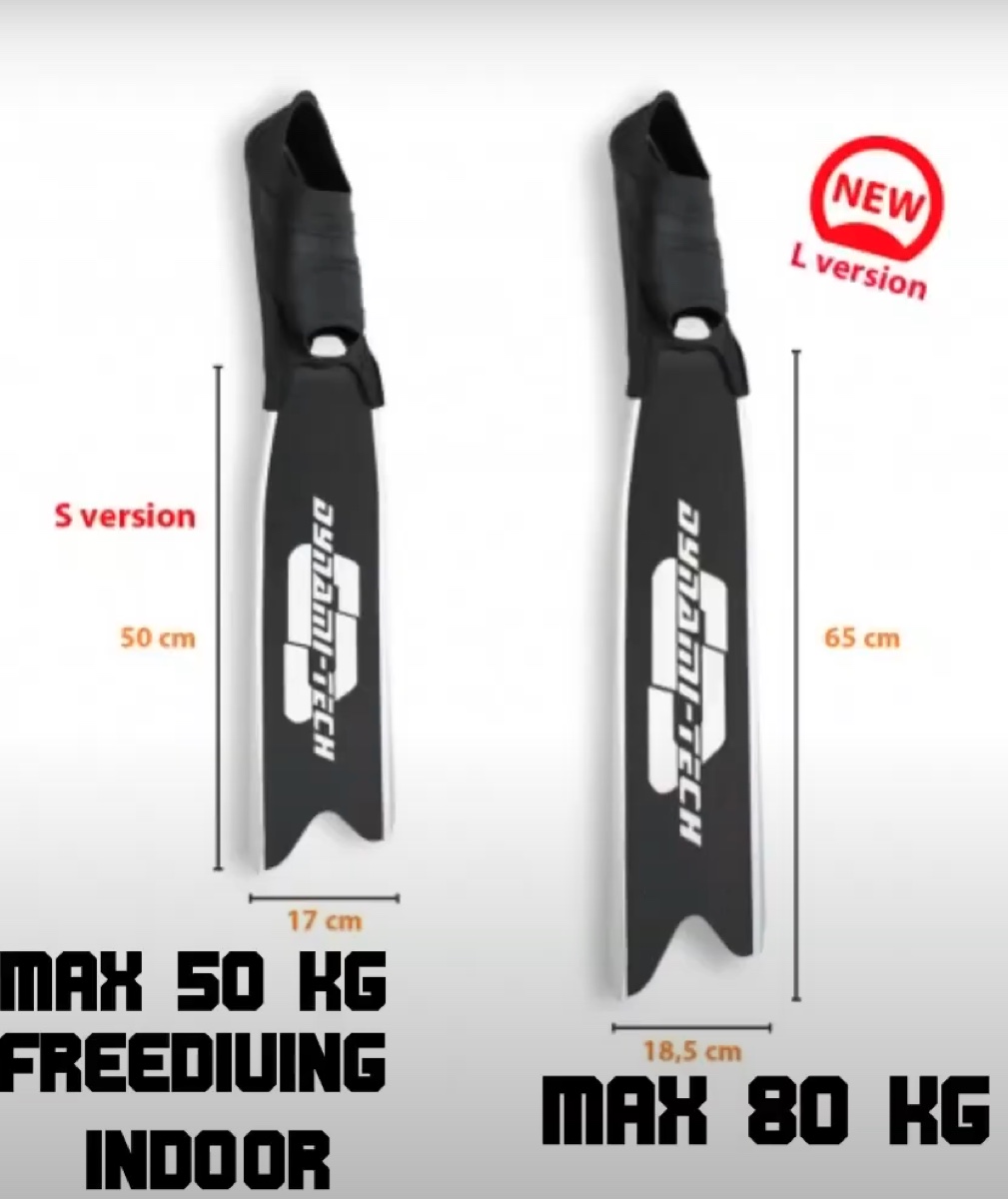
Built for pool and outdoor fun. The whole range runs small.
Short
- Worth considering for users under 50kg
- Easy to travel with — they bend to fit in a cabin bag
- Usable for spearfishing within 4 metres
Long
- For users up to 75kg
- Suitable for both pool and open water
The whole range in one table
| Model | Where it sits | Official weight guidance |
|---|---|---|
| PRANA | Spearfishing, medium-to-shallow; reef and near-shore swell | SOFT ≤ 75kg / MEDIUM ≤ 90kg |
| EDGE | Deep spearfishing; strong legs | extra-soft and soft also freedive, 75–90kg |
| MANTRA | Freediving (with DRS), spearfishing too | See the official chart |
| MANTRA CWT Competition | Constant weight | SOFT ≤ 55kg / MEDIUM ≤ 75kg |
| DYNAMI-TECH Short | Pool and outdoor; packs into a cabin bag | Consider under 50kg |
| DYNAMI-TECH Long | Pool and open water | ≤ 75kg |
Performance scores by scenario
This is probably the most important chart in the whole article.
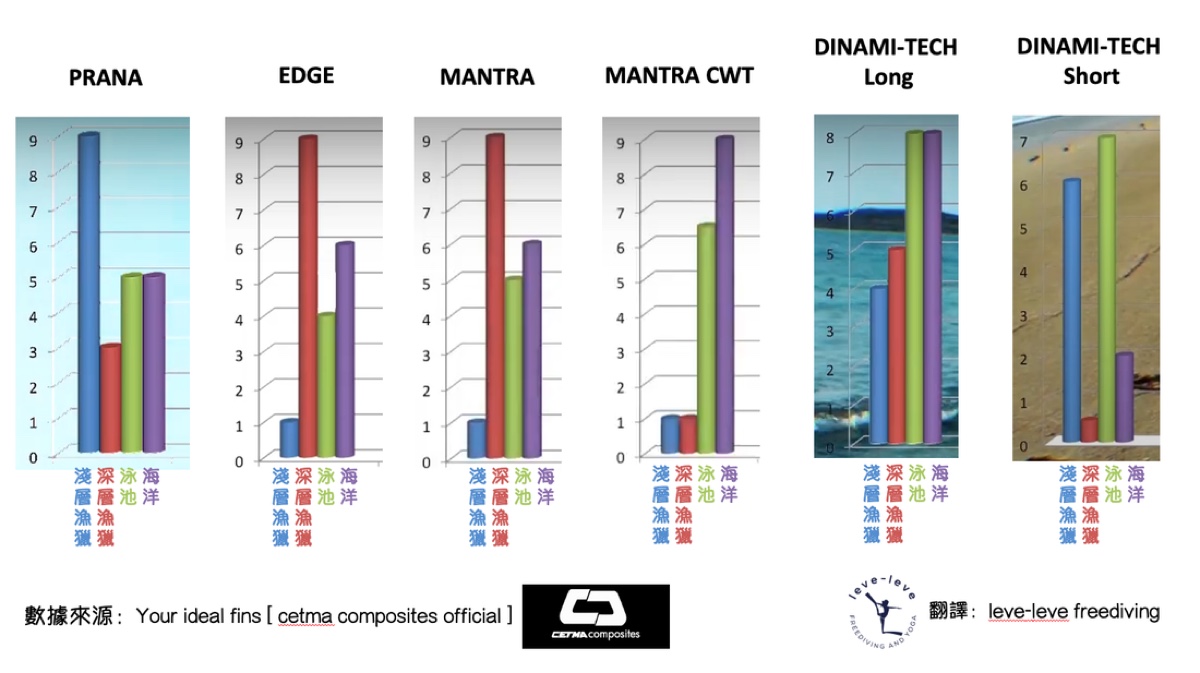
The data comes from CETMA's official YouTube channel. Since everyone differs in height, weight, muscle and even leg proportion, what settles it is still trying them on.
Recap
- Use case first, stiffness second — not the other way round
- Body mass is not just weight: height, lower-leg length and muscle all count
- Your fins should not leave your legs overworked — that is the simplest test of whether you chose wrong
- Every official weight range is a starting point. Try them.
- On the MANTRA's DRS: the resonance physics is real, but I have not seen research showing these fins exploit it
Translated and compiled by leve-leve freediving.